



Why am I afraid of emotional closeness even though I want it?
You might long for a warm relationship, for someone who understands you without you having to explain everything. But as soon as someone genuinely gets close to you, you feel a tightness in your chest, a sudden urge to withdraw, or a coldness you can't explain. The question is: Why am I afraid of emotional intimacy? Although I crave love and affection, it doesn't mean you're incapable of love, nor does it imply anything wrong with you. Often, there's a part of you that has learned that closeness can be costly or insecure.
Fear of intimacy isn't always a conscious decision. It can manifest as anxiety, overanalysis, choosing emotionally unavailable relationships, or feeling suffocated when the other person asks for clarity or commitment. Often, it hides behind an image of independence and strength, as if the person doesn't need anyone.
Why am I afraid of emotional closeness?
Because your nervous system doesn't just read closeness through words, but through experience. If love in your childhood was associated with criticism, neglect, moodiness, control, or betrayal, emotional openness can become a warning sign. Even if the person in front of you is kind and safe, your body might respond as if an old pain is about to resurface.
This doesn't necessarily mean you have a clear memory or a single event that explains everything. Sometimes the wounds are made up of small, recurring details: speaking up and finding no one to listen, being rewarded only when you're perfect, having your feelings minimized, or feeling that your needs are a burden on others. Over time, you might adopt a silent conviction: "It's better not to need anything, and better not to show my full self.".
When independence becomes a means of protection
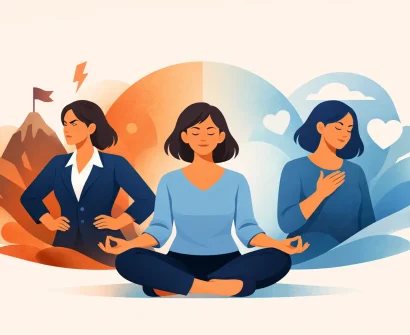
Independence is a beautiful value, but it can become a shield when built on fear. You might say, "I'm comfortable on my own," when in reality you've grown accustomed to not seeking support because you don't expect it. You might prefer to maintain a distance because closeness means there's someone who could influence or hurt you.
The problem isn't that you need space. Every healthy relationship needs space and boundaries. The problem arises when distance becomes the only option that makes you feel safe, and when withdrawal becomes automatic as the relationship gets closer to honesty.
The fear of being seen as you are
Emotional closeness means being seen by someone beyond the accomplishment, the outward calm, and the carefully chosen words. For a high performer, this idea can be overwhelming, as success may have been their old way of gaining acceptance and masking anxiety or feelings of inadequacy.
This is why receiving love can be harder than giving it. Giving puts you in a position of control, while receiving requires you to be present and to believe that your worth doesn't depend on what you offer. This can awaken a deep fear of rejection: What if they find out the truth about me and then leave?
How does fear of intimacy manifest itself in relationships?
Fear doesn't always manifest as outright escape. Sometimes it seems perfectly logical. You might discover a major flaw in the other person after a beautiful moment together, or begin to doubt your own feelings as soon as they become interested in you. You might also feel a strong attraction to someone who can't commit, because the relationship then offers a sense of closeness without putting you at risk of complete vulnerability.
It may also appear in a recurring pattern: the relationship begins enthusiastically, then as communication deepens, you become slow to respond, suddenly preoccupied, or start an unnecessary argument. This isn't because you want to hurt the other person, but because a part of you is trying to regain the distance it feels protects you.
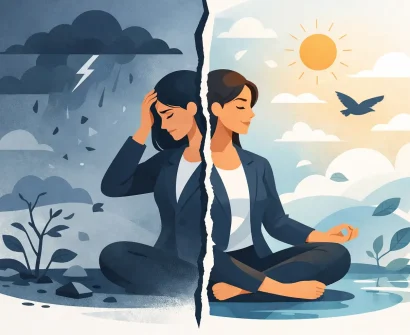
There's a crucial difference between a relationship being genuinely unsuitable and your nervous system being afraid of a suitable relationship. The former requires insight, boundaries, and a clear decision. The latter requires patience, compassion, and understanding of what's happening internally before making a life-altering decision externally.
Not all hesitation stems from a fear of intimacy.
It's wise not to interpret every reservation as an old wound. Perhaps you don't trust this person for legitimate reasons, or because of differing values, or behaviors that cross your boundaries. Healthy intimacy doesn't require you to ignore red flags or sacrifice your dignity in the name of healing.
The difference often lies in the pattern. If the withdrawal happens repeatedly with people you seem relatively safe with, and at the very moment they approach you, then it warrants deeper curiosity. Don't just ask, "Is this person right for you?" Ask also, "What happens inside me when things get real?"«
From protection to security: Steps that begin from within
Healing doesn't mean forcing yourself to share all your secrets or entering a relationship before you're ready. Pressure can actually strengthen defenses. The point is to learn. Building security within youSo that closeness becomes a conscious choice, not a threat that forces you to flee.
Begin by observing the moment of withdrawal. What happens in your body before you disappear or your heart shuts? Perhaps a knot in your stomach, a tightness in your throat, numbness, or a desire to end the conversation. Name the experience for what it is: «There’s a scared part of me right now.» This simple sentence shifts you from self-blame to a relationship with yourself.
Next, slow down. Instead of swinging between complete disclosure and complete withdrawal, try sharing a small truth with someone you trust. Say something like, «I need time to process how I’m feeling, but I don’t want to walk away without an explanation.» Quiet clarity builds more trust than grand promises.
It's also helpful to examine the language you use with yourself. If you describe your sensitivity as a weakness, or your need for connection as a burden, you're repeating the message that fear has taken root in. Your need for connection is not a flaw. You are human, and humans don't thrive in emotional isolation, even if they become accustomed to it.
Working with the root, not just the display.
Communication tips may help, but they are not always enough when fear is stored in the body and in Deep protection patterns. This is where working with a qualified and trauma-sensitive professional or practitioner becomes a different space. The goal is not to explain your life to you, but to help you recognize your protective parts, understand what you fear, and gradually build a capacity to remain present with difficult emotions.
Approaches such as compassionate inquiry, working with internal components, andNervous system regulationIt can be helpful when presented skillfully and at a pace that respects your boundaries. There's no magic technique or one-size-fits-all timeline. Some people first need stability and clear boundaries, while others discover that the hurt is linked to a past relationship or old messages about value and love.
At Montasir Musa's platform, the work begins with a simple yet profound idea: your behavior is not your enemy. Even the withdrawal that hurts often began as a smart attempt to protect yourself at a time when you had no other options. When you understand this protection instead of fighting it, change becomes less violent and more genuine.
Emotional closeness doesn't begin when you find the perfect person. It begins when you stop punishing yourself for your fear and learn to say to your cautious side, "I understand why you're protecting me. I won't rush in, but I won't leave you alone either." From this space, love can become less threatening, distance less necessary, and your heart more capable of choosing.