



A guide to integration after in-depth sessions, consciously and safely.
The deep session might end with you feeling a lightness you haven't known in years, or a heaviness you can't name. Perhaps you'll emerge with clear insight into an old fear, a long-held cry, or a sudden feeling of anger and sadness mingling. This is where it begins. Integration guide after in-depth sessionsNot as a set of duties, but as a safe space that helps your nervous system absorb what has been opened up without the healing turning into new stress.
The session isn't the end of the process. Sometimes it's the moment your mind stops running away and your body starts talking. What happens between sessions determines whether insight will become a lasting change or just a fleeting experience that fades into the familiar rhythm of life.
What does integration mean after a deep session?
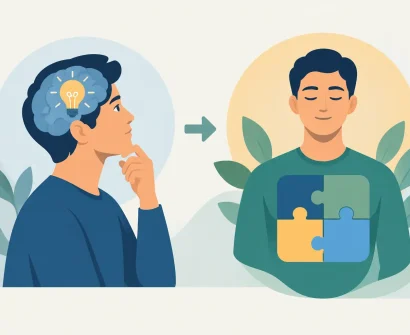
Integration is about making the experience a part of your real life. It's about noticing what the session revealed about your needs, limitations, and patterns, and then addressing them gently and gradually. You're not required to interpret every feeling, nor to fix everything immediately.
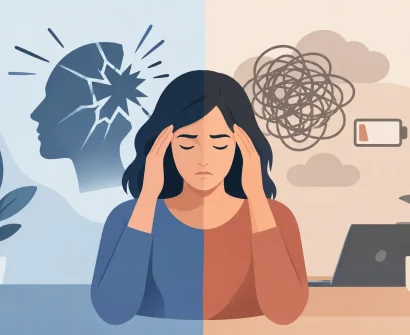
In trauma-sensitive work, a delayed response may appear after the session: fatigue, emotional sensitivity, vivid dreams, a desire for solitude, or painful clarity about a relationship or decision. These responses do not necessarily mean that something went wrong. They may mean that your nervous system is processing material that it has been holding back to protect you.
But there's a difference between healthy openness and depletion. Good integration brings you back to reality: to your body, your routines, your secure relationships, and your ability to choose. Chasing emotions or reopening wounds alone for hours can push you beyond your window of tolerance instead of supporting your healing.
First 24 hours: Keep the noise down and don't ask for definitive answers.
After a deep conversation, resist the urge to make a life-altering decision immediately. You might feel an overwhelming certainty that you need to end a relationship, quit a job, confront someone, or completely change your life. Respect the message you've received, but give it time before turning it into a decision.
If possible, leave some time free of heavy commitments on the day of your session. Reduce stimulants, avoid heated discussions, and postpone tasks that require intense concentration. Drink water, eat a light, nutritious meal, take a warm bath, or go for a slow walk. These aren't minor details. Your body needs tangible signals that it's back to normal.
Don't make your phone your first refuge. Constantly scrolling, following the news, or frantically searching for an explanation for everything you've felt can disrupt your inner peace. If you need to express yourself, write a few lines or record a voice memo. Write down what happened as it happened, without trying to make it sound logical or beautiful.
Two questions are enough to begin with
Instead of analyzing the session from every angle, ask yourself: What is the most present feeling in my body right now? And what small thing will make the coming hours safer?
The answer might be: sleep, silence, a warm meal, a message to a trusted person, or simply telling yourself, "I shouldn't solve this tonight." Simplicity here isn't escapism; it's organization.
When the pain returns after you thought you were free of it
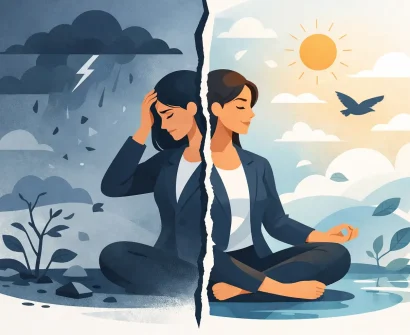
One of the most cruel ideas is to think that the return of anxiety or sadness means the session has failed. Healing isn't a straight line. Sometimes the session gives you a moment of deep connection with yourself, and then in the following days, old protection patterns return: pleasing others, withdrawing, self-criticism, tension, or numbing yourself with distractions.
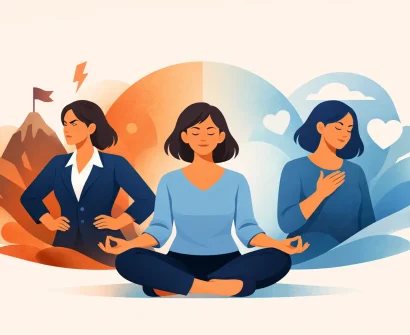
These patterns didn't arise because you're weak. They arose because they were trying to protect you at some point. In approaches like IFS and NARM®, we don't treat the anxious or withdrawn part as an enemy to be silenced, but as a part that needs understanding, boundaries, and calm inner guidance.
When you notice a familiar pattern returning, try saying, «I see you’re here. I don’t need to fight you. What are you trying to keep from me?» Then don’t force yourself to answer. Sometimes, simply shifting your attitude from rejection to compassionate curiosity is enough to ease the tension.
A guide to integration after in-depth sessions into daily life
True change is not measured only by how you feel during the session, but by what you do when you receive a provocative message, or when someone asks you to do more than you can, or when you wake up with an old constriction in your chest.
Choose one small experience that reflects the insight you've gained. If you realize you're saying "yes" out of fear of rejection, perhaps integration is delaying your response instead of immediately agreeing. If you touch upon a deep sadness of deprivation, integration might be allowing yourself to ask for specific support from a trusted person. And if you discover your body is constantly on edge, integration might be five minutes of quiet breathing or a walk without your phone.
The point isn't to build a perfect routine. The point is to give yourself repeated proof that your life is no longer run entirely by fear. A small step, repeated sincerely, is more powerful than a big promise that falls apart after a couple of days.
Keep a record of the patterns, not the judgments.
Take notes in a way that helps you see the bigger picture, not beat yourself up. You could write, "I felt uneasy before the work call, but I agreed even though I was tired," instead of, "I never learn." The first sentence gives you information. The second puts you in a position of shame.
Also, pay attention to what truly calms you. You might find that calling a trusted friend is more grounding than solitude, or that a short period of solitude is necessary before talking. There's no one-size-fits-all approach. What works for you depends on your history, your stage of healing, and your current ability to stay with your feelings without being overwhelmed.
Don't turn healing into a performance project.
People accustomed to success and achievement may approach inner healing with the same mindset: more sessions, more books, more exercises, and faster results. But emotional wounds don't always respond to pressure. In fact, the rush itself might be a continuation of the pattern that exhausted you: "My worth is tied to what I achieve, even in my healing.".
Integration requires a rhythm that canYour nervous system Bear with it. Sometimes close sessions are appropriate when there is sufficient support and stability. And sometimes you need more time between sessions to truly experience what you've learned and notice its impact on relationships, work, and your body. Don't compare your pace to anyone else's.
Also, be wary of consuming therapeutic content incessantly after an emotional session. Knowledge is helpful, but it can become a way to escape the feeling. You don't need a new term to believe that what you felt was real.
How can you request support without losing your privacy?
Not everyone close to you is qualified to handle what you open up about in therapy sessions. Choose someone who knows how to listen without offering quick advice, belittling others, or being intrusive. You can simply say, "I've had a deep session and need to stay calm today; I don't need a solution." This sets clear boundaries and gives the other person a practical way to support you.
If you don't have someone you can trust right now, don't let that be proof that you're alone or unloved. It can be part of the process to build that trust. Your safety net graduallyAnd to learn to distinguish between closeness that comforts you and closeness that reactivates your wound.
When do you need to contact a specialist?
Some discomfort after sessions is expected, but you don't need to bear it all alone. Contact your practitioner or a qualified professional if severe insomnia persists or worsens. panic attacksOr you may feel a strong detachment from reality, experience a disruption in your ability to function and care for yourself, or have thoughts of self-harm. In cases of immediate danger, seek local emergency assistance or immediately contact someone nearby and safe.
Professional support is not a sign of weakness. It is a responsible choice when the issue that has arisen is too much for one to handle alone. In support sessions, what has happened can be reorganized, and what needs calming down and what needs deeper reflection can be identified, without rushing or exaggerating.
Give insight time to become confidence.
You may not feel the transformation every day. It might manifest as a small difference: pausing before you apologize for being there, sleeping more peacefully, recognizing stress before it explodes, or feeling less distant from yourself. These aren't insignificant changes. They are signs that you're beginning to take control of your life again.
Don't demand proof from your heart that it's healed. Simply continue to meet it with honesty, gentleness, and appropriate support. What opens up in the session doesn't need you to push it forward, but rather to walk with it one safe step at a time.