


The difference between awareness and integration, and why understanding is not enough.
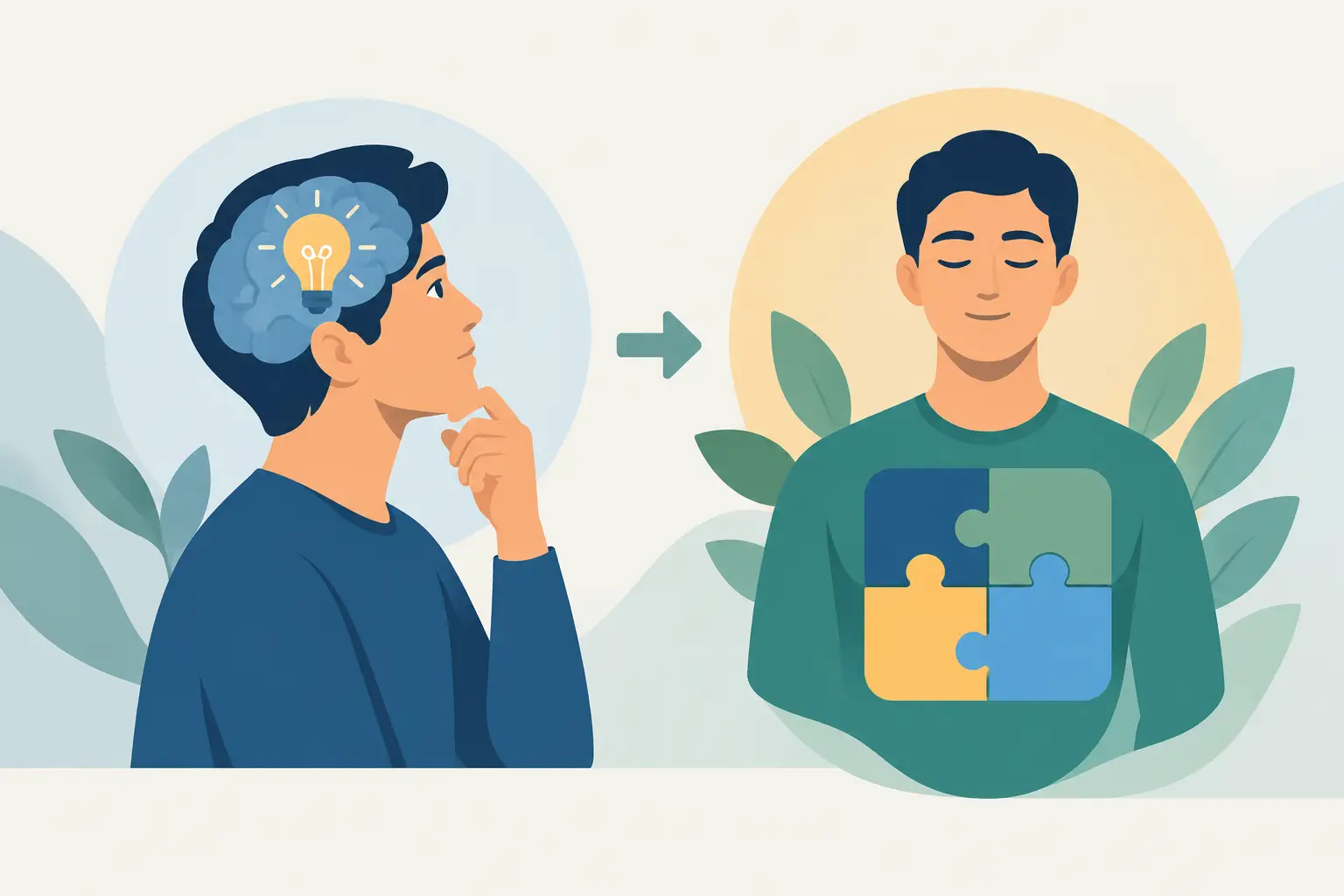
The difference between awareness and integration, and why understanding is not enough.
You may know perfectly well that your anger isn't due to the current situation, but rather to an old wound. You may realize that your anxiety intensifies when you feel invisible or unappreciated. Yet, you might find yourself reacting violently, withdrawing abruptly, or pleasing everyone else at your own expense. This is where it comes in. The difference between awareness and integrationSeeing the pattern does not necessarily mean being able to break out of it.
This isn't a failure on your part, nor is it proof that your awareness is lacking. Many conscious people, especially high achievers who are accustomed to self-analysis, possess a deep understanding of their history and emotions, yet they still experience the same pressure in their bodies and relationships. This is because the mind may arrive at the truth before the nervous system feels secure enough to act upon it.
What is consciousness, really?
Awareness is the ability to observe. It's paying attention to what you feel, what you think, what's happening in your body, and what triggers you in relationships and situations. It's saying: I'm feeling anxious right now, or ashamed, or afraid of rejection, or repeating a pattern I know all too well.
Awareness is a precious step because it moves us from automatic existence to seeing what is happening. Without it, we might always blame others, label ourselves as weak, or seek superficial solutions to a deeper problem. Awareness grounds language in experience and reveals the connection between our current reactions and what we have previously learned about safety, love, and worth.
But awareness can remain mental. You can know you need to set boundaries, yet find it impossible to say no when someone stands in your way. You can understand that pleasing others is draining, yet feel overwhelming guilt if you choose yourself. You can realize your partner didn't mean to hurt you, yet your body remains on high alert as if real danger has struck.
The knowledge here is correct, but it has not yet become a lived experience.
What is integration?
Integration is when knowledge becomes part of your authentic response to life, not just a concept you hold of yourself. It's when your body gradually senses what your mind knows. And it's when you can stay close to your feelings without being consumed by them, and close to others without losing yourself.
When awareness deepens, difficult emotions don't disappear from your life. You don't become someone who doesn't get angry, doesn't get afraid, or doesn't get hurt. What changes is your relationship with what manifests within you. You gain more space to feel, breathe, and choose, instead of fighting, running, or automatically freezing.
Integration doesn't mean perfection either. You might revert to an old pattern under pressure, but you'll notice it more quickly, be able to fix what happened, and gently return to your old self. This return isn't a minor detail, but a sign of genuine neurological and emotional maturity.
The difference between awareness and integration in a moment of tension
Imagine you received a brief message from someone important to you. Your subconscious might say: This message has awakened a fear of being ignored, and perhaps it reminds me of past experiences where I felt unimportant.
Integration, however, is revealed in what happens next. Instead of sending a barrage of messages, withdrawing silently, or building a painful narrative in your mind, you can pause. You notice your chest tightening, allow yourself to calm down a little, and then ask: What do I need now? Do I need self-reassurance? Time? A clear, direct question without accusation?
Awareness explains the reaction. Integration creates a space between stimulus and reaction. And it is in this space that self-direction begins.
This distinction is crucial for those who have experienced trauma or insecure relationships. Trauma isn't confined to the memory; it can manifest as a racing heart, tense shoulders, difficulty sleeping, hypervigilance, emotional detachment, or a strong need for control. Therefore, it's not enough to simply Understanding the past If your body is still living as if the past is continuing.
Why might awareness sometimes increase pain?
There is a painful phase some people go through after starting to work on themselves: they see their patterns clearly, but they don't yet have the tools or the inner strength to change them. They feel frustrated and may even attack themselves with phrases like, "I know this about myself, so why am I still doing it?"
This harshness doesn't help. The part of the person who repeats the behavior isn't necessarily stubborn or destructive. Often, it's a part that learned, at some point, that this behavior is the best way to stay safe. The person who tries to please everyone may have learned that love is conditional. The one who shuts their heart out when someone is close may have learned that neediness ends in hurt. And the one who gets angry easily may be protecting a vulnerability that never found a safe haven before.
Deep work doesn't just ask: How do I get rid of this part? It asks: What is it trying to protect me from? And what does it need so that it doesn't have to scream, withdraw, or take control?
This is where trauma-aware approaches become useful, because they don't treat the individual as a problem needing immediate fixing. Instead, they view symptoms and defense mechanisms as meaningful messages. In work such as compassionate inquiry, family internalization, or structured body practices, the goal isn't to force change, but to build sufficient security that allows change to occur from within.
How do you know that consciousness has begun to transform into integration?
This journey isn't measured by the number of books you've read, nor by your ability to accurately describe your childhood. It unfolds in small but profound details. You might notice that you no longer need to justify every feeling you have. Or that you can stay in a difficult conversation without breaking down or becoming defensive. Or that you apologize when you're wrong without being consumed by shame.
It also becomes apparent when your relationship with your body changes. You begin to notice early signs of stress before it reaches a breaking point. You realize that your stomach ache isn't always something to be ignored, that fatigue can be a message, and that your need for rest isn't laziness. Your body becomes a partner in understanding, not a burden to be silenced.
Integration may manifest itself in four distinct transformations:
- To distinguish between feeling and reality, so you say: I feel that I am rejected, instead of asserting that I am actually rejected.
- To tolerate a greater degree of closeness and difference without losing your balance or boundaries.
- Treat the setback as an opportunity for understanding and improvement, not as proof that everything you have done has been in vain.
- To choose a more honest response, even when the old reaction is quicker and easier.
From understanding to safe practice
Integration doesn't happen by forcing yourself to be better. It happens through gentle repetition, by returning to the present moment, and by facing what you can within your capacity. If you try to reopen all wounds at once, you may overwhelm your nervous system. Gradual healing isn't running away from pain, but rather a wise respect for your inner rhythm.
Start with one recurring moment in your life. Perhaps a moment of receiving criticism, a moment of silence from someone you love, or a moment when you feel you have to prove your worth. When it arises, don't rush to analyze. First, ask: What is happening in my body right now? Where do I feel it? What does this part of me need at this moment?
The answer might be simple: slower breathKeeping your feet firmly on the ground, delaying your response for ten minutes, or writing down what you want to say before sending it—these aren't productivity tricks. They're safety signals that help you regain control.
Then ask a deeper question: What truth do I know, but cannot yet live? Perhaps you know you deserve love without expecting anything in return. Or that boundaries don't mean abandoning others. Or that expressing a need doesn't make you a burden. Don't try to force yourself to believe this truth immediately. Approach it as you would approach someone who is afraid: gently, honestly, and without force.
When do you need deeper support?
Self-awareness and daily practices can be a good start, but they aren't always enough. If your feelings are leading to panic attacks, persistent insomnia, a disconnect from reality or your body, recurring abusive relationships, or a chronic feeling of helplessness, then the presence of a qualified and trauma-aware professional may provide the necessary support. A safer space For work.
Good support doesn't force you to explain your experience, nor does it push you to relive your pain before you're ready. It helps you build inner resources, understand the root of your responses, and approach the wounded without reopening old wounds. That's the difference between exposing a wound and healing it.
You don't need to become a perfect version of yourself to be on the road to recovery. It's enough to start noticing the moment you lose touch with yourself, and then reconnect. Time and time again. When awareness becomes wholeness, life doesn't become painless, but you stop letting your pain control you.