



Trauma healing begins when your body learns safety.
Your life may appear orderly from the outside: a good job, responsibilities fulfilled, people who depend on you, and perhaps achievements that others see as proof of your strength. But in moments of quiet reflection, something entirely different may emerge: a unease you can't pinpoint, a restless alertness, fragmented sleep, or a feeling of being distant from yourself no matter how hard you try to be present. This is where the real conversation begins. Trauma healing.
Trauma isn't always a single, obvious incident or painful memory. Sometimes it's years of stress within an unsafe home, constant criticism that made you doubt your worth, or a loss you didn't have enough space to grieve. It might be moments when you needed protection or support, but instead had to remain silent, adapt, and carry on.
What happened isn't a flaw in you. What you're feeling today might be a clever way your nervous system is learning to protect you. The problem is that what protected you in the past might be holding you back now.
Healing from trauma is not about forgetting what happened.
There's a painful and misleading notion that healing means moving on from the past, ceasing to be affected by it, or forgiving too quickly to appear spiritually mature. But deeper healing doesn't require you to deny your experience or violently relive it.
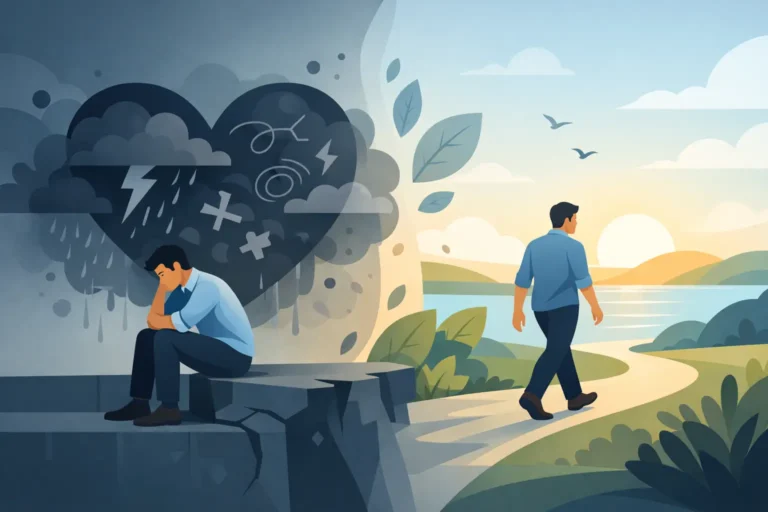
Healing from trauma means being able to remember what happened without your body dragging you back into the same danger. It means noticing anger without it destroying you, fear without it dictating every decision, and sadness without making you feel alone. It means reclaiming the space of choice between what you feel and what you do.
The event may remain part of your story, but it is no longer the sole author of your life. This isn't a motivational statement. It's a gradual process in which the body, mind, and relationships relearn how to be safe.
When the body speaks a language we don't understand
Many people ask for a logical explanation of what happens to them: Why do I get so worked up so quickly? Why do I avoid confrontation? Why do I appear calm while inside I am in a state of emergency? Why do I get close to others and then immediately move away?
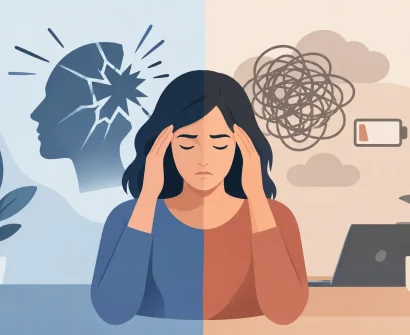
The answer isn't always in thinking alone. Trauma is also stored as patterns in the nervous system. It may manifest as clenched jaws and shoulders, difficulty breathing, fatigue after social interaction, or a need to control every detail. It may also appear in Freezing imageYou know what you want to say, but the words won't come out. Or, in the form of pleasing others: you agree to what hurts you because rejection makes your body feel threatened.
These responses are not a sign of weakness. They are survival responses, like fight or flight, freeze or appease. But they need compassionate understanding, not further self-flagellation.
Why is awareness alone sometimes not enough?
You may read extensively about attachment, boundaries, and the inner child, and fully understand the roots of your pattern. Yet, you find yourself repeating the same relationship or crumbling in the same situation. This doesn't mean you've failed to work on yourself.
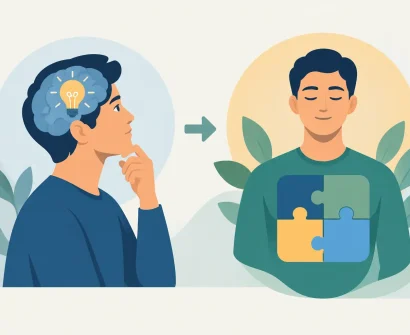
Cognitive understanding illuminates the map, but it doesn't necessarily calm the escalating alarm within the body. When the survival response is active, your mind may perceive the situation as safe while your body reacts as if it were threatened. Therefore, recovery often requires a path that combines meaning, body awareness, and a secure relationship.
In consciously working through trauma, we don't seek the quickest way to release emotions. Speed isn't always healing. Sometimes, rushing into memories or emotional release becomes another form of nervous system overload. What we need is the right dose: enough closeness to understand what's happening, and enough stability so we don't get overwhelmed.
What does the road to recovery actually look like?
There is no one-size-fits-all path, because the impact of trauma varies depending on age, relationships, environment, and the resources available to you right now. But there are principles that give the path a clear direction.
The first step is to build a sense of security before delving into the details. Security doesn't mean that all risks disappear from life, but rather that your body feels more capable of pausing, breathing, calling for support, and returning to the present moment when emotions rise. This might begin with noticing what makes you feel relaxed and what makes you feel constricted, and who are the people around whom you don't need to put on a mask of strength.
Then comes the honest labeling of the experience. You don't have to prove that what you went through was bad enough. If something still hurts or limits your freedom, it deserves attention. Sometimes the most healing phrase is, "That was too much for me at the time.".
Then, work begins on the patterns created by experience. You might discover a part of yourself that monitors everything to prevent surprises, or a part that pushes you to achieve relentlessly to avoid feeling empty, or a small part that harbors an old fear of rejection. In the IFS (Internal Family Systems) methodology, we don't treat these parts as enemies, but rather understand their protective intentions and build a different relationship with them.
Through mindful physical practices, such as TRE® (Tension and Trauma Release Exercises), some people can observe how their bodies process stress and gradually return to normalcy. These practices are not suitable for everyone or a substitute for therapeutic care when needed; therefore, it is important to practice them within a trauma-aware framework and at a pace that respects your individual limitations.
A secure relationship is not a minor detail.
Many wounds are formed within a relationship: a relationship marked by fear, neglect, control, betrayal, or emotional absence. Therefore, it's not surprising that a significant part of the healing process also occurs within a seemingly safe relationship.
Good support doesn't pressure you to speak before you're ready, doesn't interpret everything for you, and doesn't promise you'll become a perfect version of yourself. It's a space where you're met with respect, curiosity, and clarity. A space where you learn that your feelings can be seen without being dismissed, and that your boundaries don't make you selfish.
This support may involve a licensed therapist, especially if you have thoughts of self-harm, severe panic attacks, addiction, intrusive memories, or a significant impact on your ability to work and relationships. Trauma-awareness counseling sessions may be a suitable space for those who want a deeper understanding of their patterns and to build coping and integration tools. The choice depends on your needs, the severity of your symptoms, and the type of support available.
Signs that don't mean you're backing down
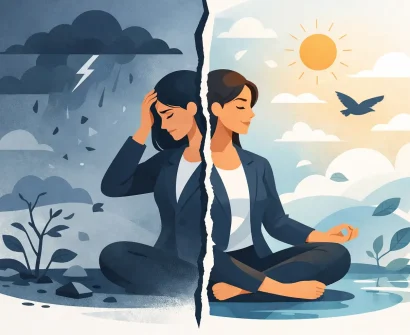
During recovery, you may experience periods of heightened sensitivity, fatigue, or a resurgence of emotions you've long suppressed. This isn't necessarily a sign of deterioration. Sometimes, when a sense of security is restored, the body stops being numbed and begins to reveal what it has been holding back.
But not every pain should be interpreted as a "sign of healing." If emotions become overwhelming, you lose the ability to function in your daily life, or you feel unable to stay safe, this is a sign to seek professional support immediately. True recovery doesn't glorify suffering; it expands your capacity to live.
What can you do starting today?
Start with a small step that doesn't require you to fix your whole life. When you feel stressed, ask yourself: What is happening in my body right now? Not why am I like this, but what exactly am I noticing? Is there tightness, heat, a desire to escape, or heaviness in my chest? Gently name what you are seeing.
Then direct your attention to something that anchors you to the present: your feet on the ground, the feel of the chair, a steady sound around you, or an exhale that's slightly longer than an inhale. Don't try to force yourself to be still. Give your body a simple message: "I am here now, not then.".
If you can, write down a situation where you repeatedly reacted in a way you dislike. Note what preceded it, what you felt, and what you truly needed at that moment. Over time, you will begin to see the difference between the current event and the old wound it reopened.
You don't need to prove your strength by taking on everything alone. Healing from trauma doesn't happen because you push yourself harder, but because you finally stop treating your pain as an enemy. Give yourself a small piece of permission today: to listen to what your body is trying to tell you, and to choose support that will guide you toward safety, one honest step at a time.