


A guide to understanding the chronic survival response and restoring security.
Your life may seem stable from the outside: you work, you accomplish things, you care for those around you, and perhaps you smile at social gatherings. But inside, there's a restless tension. You monitor everything, expect the worst, wake up tired, or feel distant from yourself and from others. A guide to understanding the chronic survival response It begins with a simple, liberating truth: what you're experiencing is not a sign of weakness or failure. Your body may still be trying to protect you.
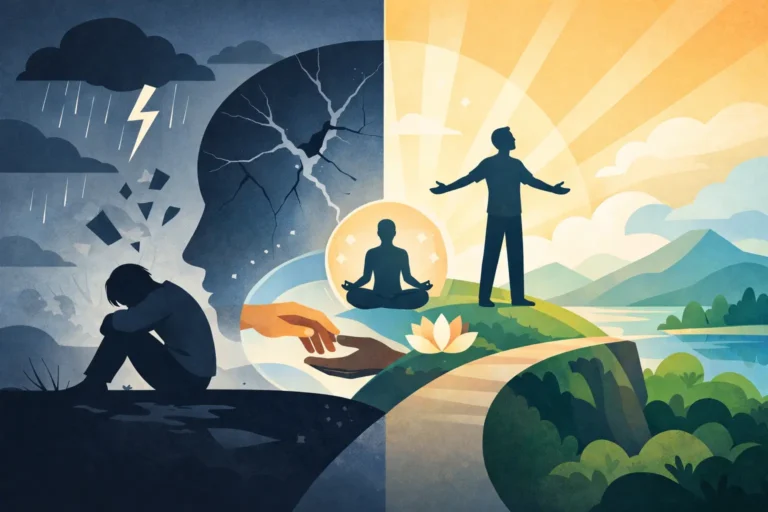
The survival response is not a problem in itself. It is an intelligent system the body has designed to deal with danger. The problem arises when this system continues to function after the danger has passed, or when there wasn't enough time in the past to process what happened. Then, vigilance becomes the norm, and calmness seems strange, even threatening at times.
What is the response to chronic survival?
When the brain detects a threat—whether it's a direct physical threat, emotional stress, or an insecure relationship—it directs energy toward survival. You might fight, flee, freeze, or try to please others to avoid rejection or anger. These aren't always conscious choices, but rather neural responses that occur very quickly.
In healthy circumstances, the nervous system returns to equilibrium after the event has passed. In a chronic survival response, however, the body remains stuck in a protective mode. Perhaps you grew up in an environment filled with criticism, stress, or unpredictability. Or perhaps you experienced loss, bullying, a painful relationship, prolonged work pressure, or a series of smaller incidents that taught your body that security is not guaranteed.
The trauma is not measured solely by the size of the event from the outside. Sometimes the wound is what you had to bear alone, and what you did not find understanding or containment for when you needed it.
How does it manifest when survival becomes a way of life?
The chronic response doesn't always manifest as outright panic. For many high performers, it masquerades as efficiency and accomplishment. You might overwork yourself because stopping opens the door to feelings you don't want to confront. You might become overly reliant on planning and control because uncertainty triggers an old alarm.
Common signs include feeling stressed even on calm days, having trouble sleeping despite being tired, or getting upset over small things and then blaming yourself. You may also experience mental fog, tightness in your jaw, chest, or stomach, sensitivity to criticism, distractibility, or a persistent feeling of falling behind no matter how much you accomplish.
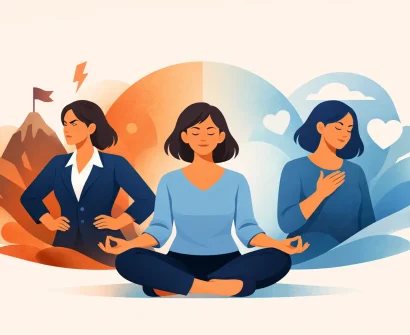
Some live in a constant state of fighting: quick tempers, defensiveness, endless internal arguments. Others escape: perpetual busyness, excessive phone use, relentless work, or withdrawal from relationships. And then there are those who freeze: procrastination, numbness, indecisiveness, and a feeling that life is passing them by. The appeasement pattern might manifest as saying yes when every fiber of your being is saying no.
These patterns may overlap. You don't necessarily have to see yourself in one description. The nervous system adapts according to what it knows is safest at a given moment.
Why aren't positive advice alone enough?
When the body is on alert, advice like «think positively,» «be grateful,» or «organize your time» may seem completely out of touch with the experience. The problem isn't that you don't know what to do. Often, you know a lot; you've probably read a lot and tried apps, meditations, and courses. But knowledge doesn't always reach the part of the body that feels fear.
The nervous system isn't convinced of safety through logic alone. It needs repeated experiences where the body doesn't feel compelled to fight, flee, or hide. This is why deep work can be different from trying to fix yourself quickly. You're not fighting a flaw in your character, but rather learning to listen to an old defense mechanism and gently updating it.
This doesn't mean that daily habits are useless. Sleep, movement, boundaries, and supportive relationships make a real difference. But their impact is deeper when we see them as part of restoring security, not as a new project that puts pressure on us.
A guide to understanding the chronic survival response in its moment
The beginning is not in forcing yourself to be calm. The beginning is in observing what is happening without judgment. When you notice tension, impulsiveness, or withdrawal, pause for a moment and ask: What does my body think it is trying to protect me from right now?
The answer might be related to the current situation, or it might be much older. A belated message from a loved one could trigger a memory of abandonment. A casual remark from a manager might awaken a fear of humiliation. A minor disagreement with a partner could bring up an old feeling of insecurity. This doesn't mean your feelings are irrational, but rather that their intensity might have historical roots.
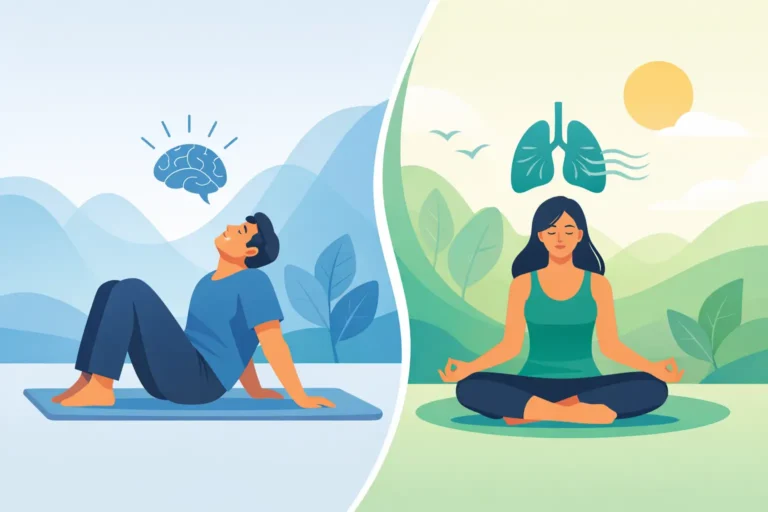
Try placing your feet on the floor and observing your surroundings: the color of the wall, the texture of the chair, the sounds of the room. Take a slower breath than usual, without trying to breathe perfectly. Then, accurately label what's happening: "There's a tightness in my chest," or "Part of me wants to escape," or "I'm afraid of rejection." Labeling doesn't erase the pain, but it creates distance between you and its waves.
If you find that focusing on your body makes you more distressed, don't force it. Look around you, talk to someone you trust, or switch to a simple, structured activity. Recovery doesn't mean tackling everything at once. Taking it one step at a time is part of being safe.
From blame to curiosity
The most important shift is to replace the question "What's wrong with me?" with "What happened to me, and what have I learned to stay safe?" This question doesn't absolve you of responsibility for your actions, but it moves you from callousness to understanding. And from understanding, true change begins.
You might discover that anger was a boundary guard, that appeasement was an attempt to maintain closeness, and that perfectionism was a way to avoid criticism. When you understand the function, you can look for healthier alternatives, instead of declaring war on a part of yourself.
What helps restore internal organization?
Restoring security doesn't happen in a straight line. There are days when you feel expansive and clear, and days when old patterns reappear. This regression isn't proof that you've failed. It's often a sign that a part of you needs more attention and support.
Start by reducing What increases the alarm Wherever you can. This might mean reducing constant exposure to news or draining conversations, setting practical boundaries with someone who pressures you, or incorporating short breaks between tasks instead of frantically switching between them. You don't need to turn your life upside down in a single day to give your nervous system a fresh message.
A secure relationship is also therapeutic. Having someone who can listen to you without belittling, rushing, or offering ready-made advice can retrain you to receive support. But choose carefully. Not everyone who loves you has the capacity to walk with you on those deep levels, and you're not obligated to explain your pain to someone who doesn't respect your boundaries.
In specialized practice, trauma-sensitive approaches can help you get to the root of the pattern without overwhelming it. Some approaches, such as Compassionate Inquiry, TRE®, IFS In-Family Systems, and NARM®, view symptoms as protective messages rather than flaws to be eliminated. Choosing the right approach depends on your history, your readiness, and what feels safe for you. There is no one-size-fits-all method.
When do you need professional support?
Seeking professional support is not an admission of helplessness, but a mature decision not to carry everything alone. If your symptoms are affecting your sleep, work, or relationships with yourself and others, or if you are experiencing panic attacks, severe numbness, or recurring traumatic memories, connecting with a qualified professional knowledgeable about trauma can be an important step.
If you have thoughts of harming yourself, or feel unable to keep yourself safe, seek immediate emergency help in your country or contact someone close who can stay with you. Don't wait until the suffering becomes "too much." You deserve support now.
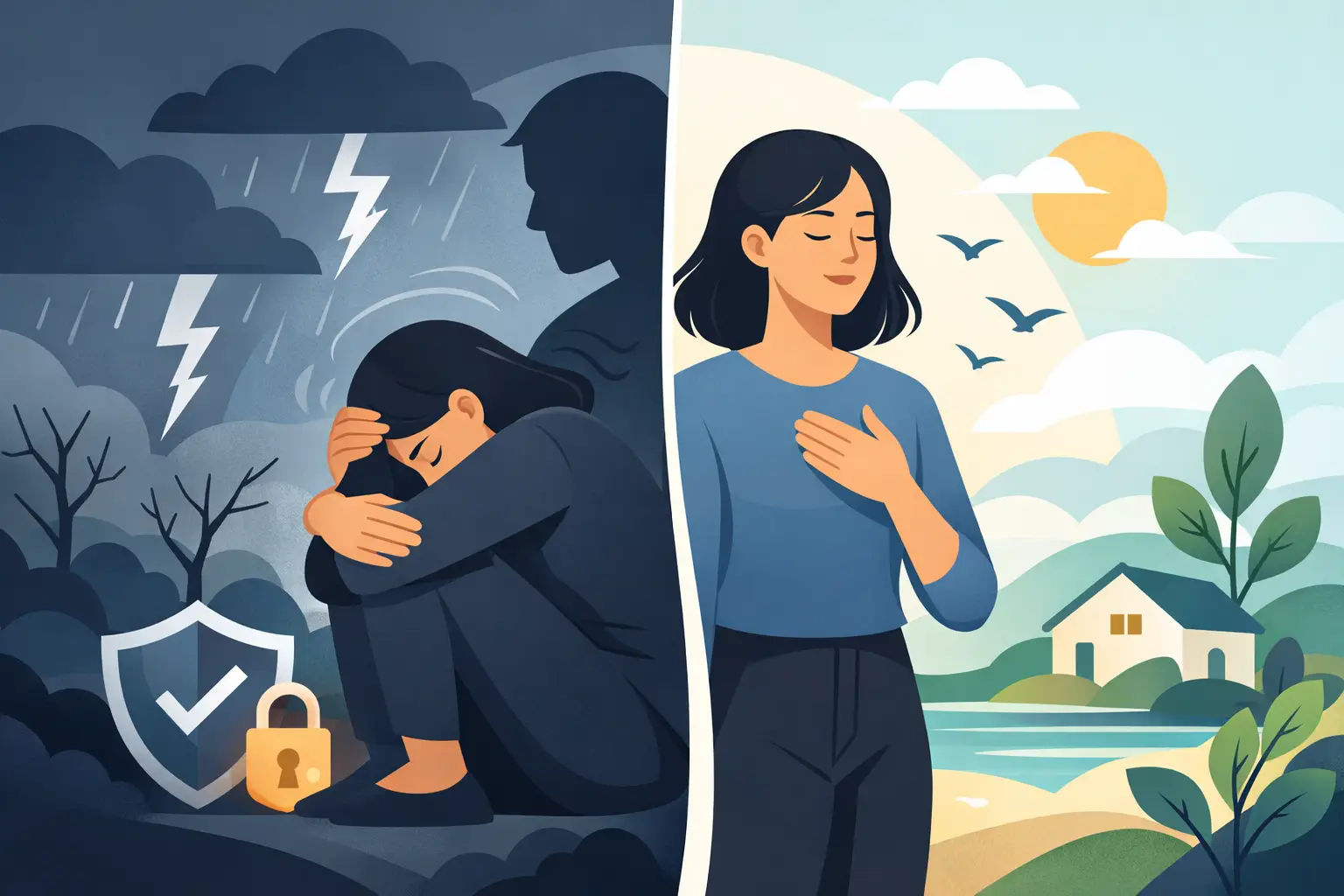
You're not too late because your body is still in survival mode. It got you here the way it knew how. And with time, honesty, and a safe space, it can learn that life isn't all about fighting. And you can remember, calmly, that safety isn't something you have to earn—it's an experience you have the right to return to.