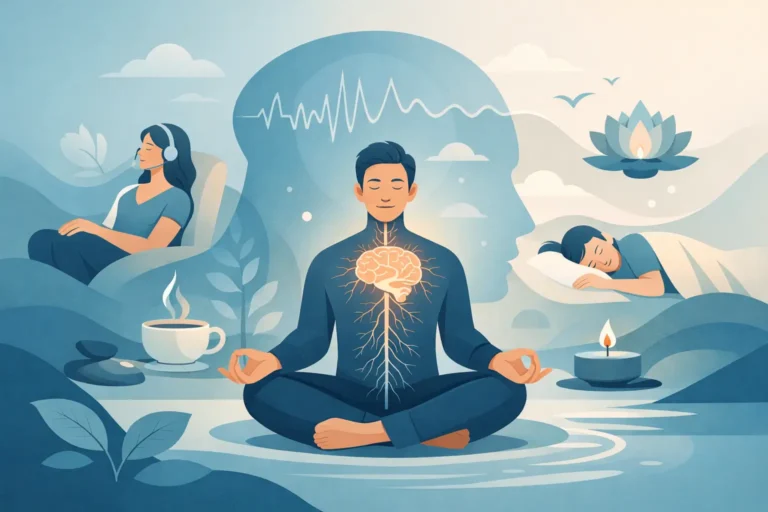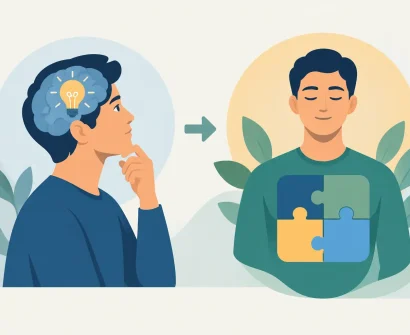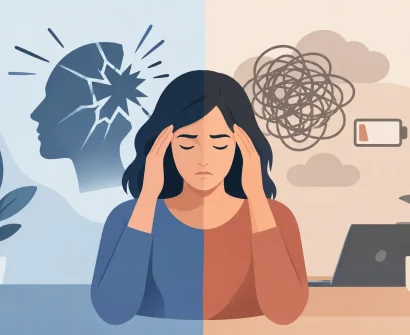



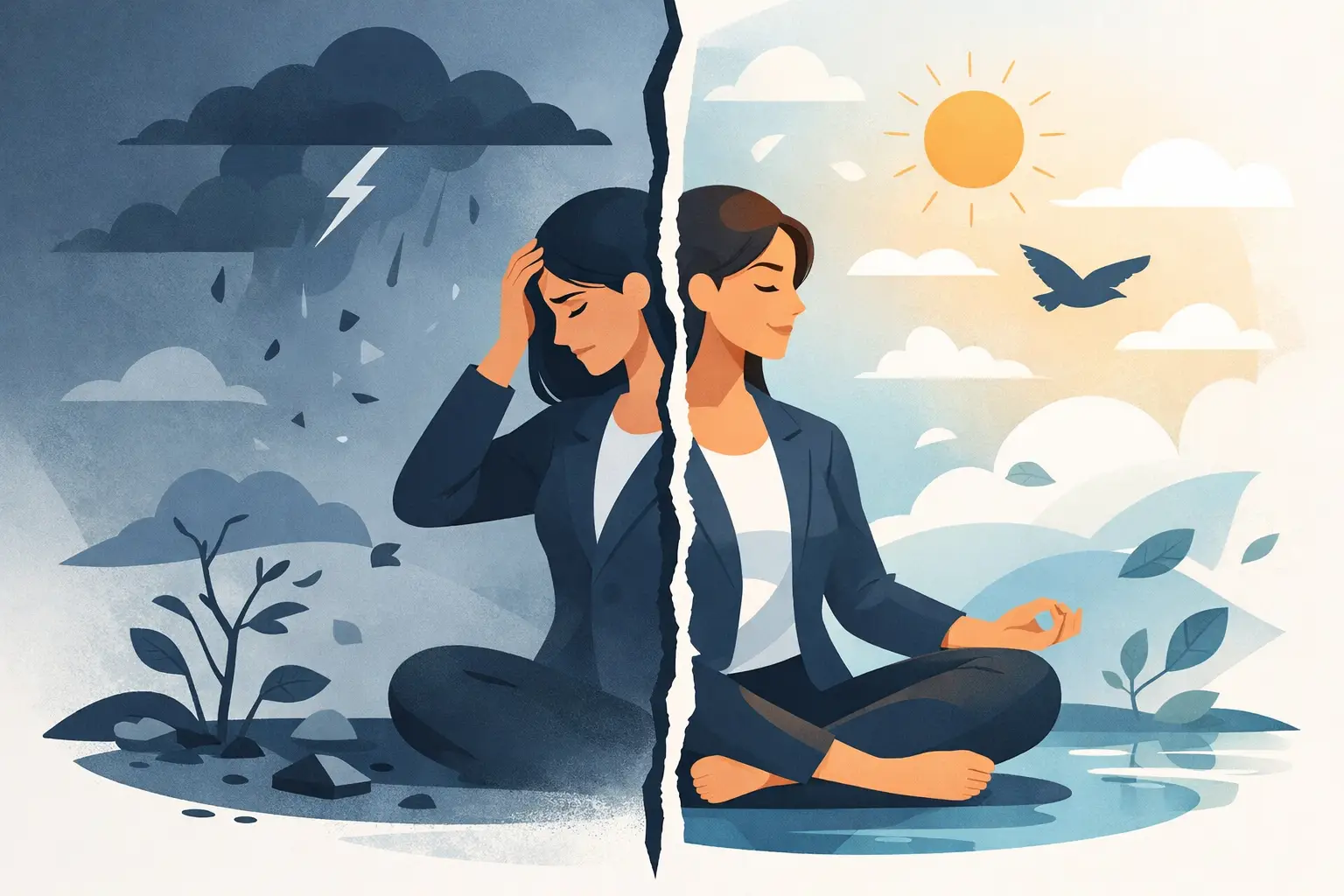
How can I deal with inner conflict without losing myself?
Your life may appear orderly from the outside: work completed, responsibilities managed, and relationships sustained. But in moments of quiet, that painful feeling may surface: as if you are physically present but absent from your soul. As if a part of you yearns for closeness, while another part withdraws immediately. And if you ask: How do I deal with inner conflict? The first step isn't to force yourself to feel that way or to accuse yourself of weakness. The first step is to understand that what's happening inside you might be an age-old attempt to protect you.
Inner detachment isn't necessarily a sign that you're broken. Often, it's a sign that your nervous system has learned, at some point, that staying safe is more important than staying connected to your feelings and needs. Perhaps you've had to suppress your anger, minimize your pain, or appear strong when there was no room for being a tired and scared person.
What is meant by internal separation?
Internal detachment is a feeling of being split or distant from oneself. You may know exactly what you should do, but feel no real ability to do it. You may love someone, then find yourself cold or defensive when they get close. You may be professionally successful, while inside you remain... A void that achievements cannot fill.
Sometimes it manifests as emotional numbness, frequent daydreaming, or a feeling of observing your life from afar. Sometimes it's more subtle: overanalyzing, constant busyness, pleasing others, or rushing headlong into work until there's no time left for feeling. These situations aren't all the same, and they can't be reduced to a single diagnosis, but what they all share is a loss of quiet connection to what you truly feel and need.
There's a difference between needing temporary space to rest and making distance from yourself a permanent pattern. Conscious space gives you rest and then brings you back to yourself. Separation, on the other hand, often leaves you more alone, even in the midst of others.
Why is this internal division happening?
Internal detachment does not arise from nothing. It may be linked to significant and obvious experiences, and it may also be formed through years of criticism, lack of inclusion, constant pressure, or living in an environment that does not allow you to say: «I am afraid,» or «I do not want this,» or «I need support.».
When a person is subjected to stress beyond their capacity to cope, the mind and body don't respond with ideal logic. They adapt. Part of you may take on the task of achievement and control, while another part carries sadness, anger, or fear beneath the surface of conscious awareness. These parts are not your enemies. They are responses that attempted to function at a time when your resources or environment were inadequate.
This is why advice that simply tells you to "move on" or "think positively" doesn't work. The problem isn't a lack of willpower. It's a broken or weakened connection between you and your body, your feelings, and your true self.
How can I deal with inner turmoil in a safe way?
The first step is to stop fighting the withdrawing part. When you ask yourself, "Why am I like this? Why can't I be normal?" you're adding a layer of shame on top of the pain. Try asking yourself a different question: "What is this response trying to protect me from?".
The answer may not come immediately. That's normal. The goal isn't to forcibly extract a memory, but to build enough security to allow the truth to emerge gradually. Conscious work with traumaSlowness is not regression. Slowness may be what makes transformation possible.
Start with the body before the story.
When you're internally disconnected, talking at length about your feelings can be exhausting or confusing. Start with something simple: Notice your feet on the floor, lean back in your chair, and take a breath—don't try to make it perfect. Ask yourself: Where do I feel tense right now? In my chest? My throat? My stomach?
You don't need to explain the sensation. Just name it: tightness, heaviness, heat, emptiness, trembling, or numbness. This observation pulls you back from the spiral of thinking to the present moment. And if focusing on the inner self makes you more anxious, open your eyes, look around you, and name five things you see. Safety begins with the right dose, not with a violent confrontation.
Give the conflicting parts a language
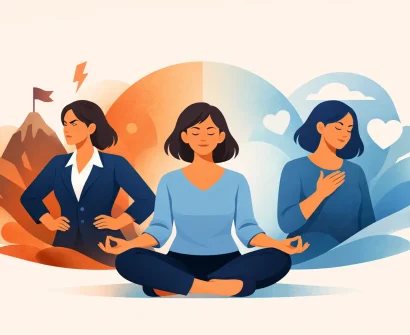
There might be a part of you saying, "I want to rest," and another part replying, "There's no time to rest; you must keep going." Instead of choosing one side and silencing the other, acknowledge both. You could write a couple of lines for each: What is it afraid of? What does it want? And when did it appear in your life?
This is close to the perspective offered by practices such as Intra-Family Systems (IFS), where internal members are not treated as flaws to be fixed, but as voices that need understanding and compassionate guidance. The goal is not to approve of every behavior, but to distinguish between respecting their protective intentions and setting clear boundaries for their actions.
For example, the part of you that's pushing you to isolate yourself might not want to destroy your relationships. It might be afraid of rejection or losing control. When you understand its fear, you can say, "I know you're trying to protect me, but I'm not going to disappear completely. I'm going to take some space and reconnect when I've calmed down." This is internal leadership language, not suppression.
Replace the harsh question with an honest one.
Instead of asking, «What’s wrong with me?» ask, «What happened to me that made this pattern make sense?» This simple shift moves you from self-flagellation to compassionate curiosity. It doesn’t absolve you of responsibility for your current choices, but it places responsibility in a more human context: you can change what you repeat when you understand what drives it.
Writing at the end of the day can help you identify patterns. Don't write a long report. Write: When did I feel disconnected from myself today? What preceded it? What did I need that I didn't express? Over time, you'll notice triggers: a certain tone of voice, criticism, emotional closeness, financial pressure, or a feeling that you're being pressured to be perfect.
Don't turn awareness into a performance project
It's easy for recovery itself to become just another quest to prove your worth. You meticulously monitor your feelings, stick to every practice, and then blame yourself if you slip back. But healing isn't a straight line. You might have days where you feel close to yourself, and then a small incident triggers an old response.
This doesn't mean you're back to square one. It often means you're approaching a deeper level that needs further development. Safety and support. The measure of progress is not the absence of worry or sadness, but rather your increasing ability to notice what is happening, to gently return to yourself, and to take a step that is less harmful to you and those around you.
It's also helpful to take stock of your lifestyle. Disrupted sleep, constant exhaustion, isolation, and excessive caffeine can make your nervous system more prone to shutting down or becoming stressed. These things won't resolve the underlying emotional issues on their own, but they do create a better foundation for deeper work.
When do you need expert support?
Support is not a luxury when disconnection is impacting your relationship with yourself, your work, or your loved ones. If you are experiencing frequent loss of focus, intrusive painful memories, panic attacks, a profound sense of unreality, or thoughts of self-harm, contact a licensed mental health professional or emergency services in your country immediately.
However, in cases where conflict manifests as chronic anxiety, emotional numbness, difficulty expressing oneself, and painful relationship patterns, working with a trauma-aware practitioner may be a very different experience than simply receiving advice. Approaches such as compassionate inquiry, TRE®, and NARM® can help you understand the root causes and regulate your body's responses, provided they are delivered professionally and at a pace that suits you.
Don't look for someone who promises to cure your pain in one session. Look for a space where you feel you don't have to prove anything, where your boundaries are respected, and where what you're going through is understood without exaggeration or minimization. A secure relationship is part of the healing process, not a side effect.
Connecting with yourself may no longer be a grand idea or a dramatic moment. It might begin with noticing you're hungry before you're exhausted, saying "no" without a lengthy apology, or staying present in a difficult conversation instead of running away. These aren't small steps. They're signs that you're returning to your inner home, gently and compassionately, time and time again.