



How can I gently and safely calm my inner hypervigilance?
You might be sitting in a safe place, yet your body can't believe it. You're monitoring other people's tone of voice, anticipating the worst before it happens, waking at the slightest sound, or feeling like you have to be on high alert all the time. If you're asking: How do I calm my inner hypervigilance?The beginning isn't about forcing yourself to relax. The beginning is about understanding that there's a part of you trying to protect you, even if it exhausts you.
Hypervigilance isn't a sign of weakness or overreaction. It's often a neurological response the body has learned after repeated experiences of fear, uncertainty, criticism, or emotional insecurity. You may not recall a single major event, as the body is also affected by constant stress and environments where there was no room for error, asking, or relaxation.
What happens when your nervous system remains on high alert?
When the nervous system senses danger, it doesn't always distinguish between a real threat in the present moment and a past memory or future possibility. This is why a delayed response to a message, a fleeting glance from your boss, or a simple conversation with your partner can feel like a major alarm. The mind starts analyzing, the body tenses, sleep is disrupted, and even rest becomes unbearable.
Hypervigilance may manifest as obvious anxiety, but it can also disguise itself as accomplishment. You might be working too hard, planning every detail, revising your words after every meeting, or staying busy to avoid hearing what's going on inside you. Outwardly, you appear in control. Inwardly, you're exhausted from constant vigilance.
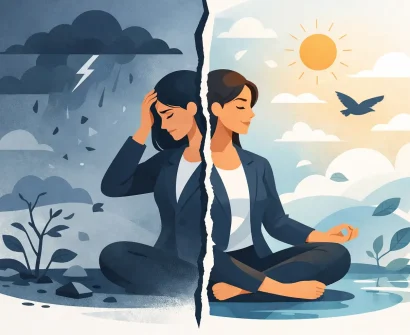
And here's a crucial point: this state doesn't subside simply by telling yourself not to worry. The body doesn't respond to commands when it believes its survival depends on constant alertness. It needs repeated, honest cues that tell it: Now is different, and I'm not alone in this moment.
How do I calm down my inner hypervigilance in the moment?
When you're at the height of your stress, don't try to solve your entire life problem. Don't make life-altering decisions, and don't explore every possible future scenario. First, return to the present in a concrete way.
Begin by slowly looking around you. Mentally name what you see: the color of the wall, the shape of the window, the light source, the objects in the room. Then notice where your body touches the chair or the floor. This isn't a distraction tactic, but a sensory message to your nervous system that you are here, in a specific place, and at a different time than the previous time of danger.
Next, slow your exhalation without forcing a deep breath. If deep breathing increases your anxiety, make it natural and just prolong the exhalation slightly. Some bodies that have experienced prolonged stress feel threatened even by vigorous relaxation exercises. Gentleness is more important than perfect technique.
You can also place your feet flat on the floor and press them gently for a few seconds, then release the pressure. Or, clasp your hands around a warm cup, wash your face with lukewarm water, or walk slowly around the room. Simple movement helps the body release some of the mobilized energy instead of it being trapped in the chest, shoulders, and jaw.
At that moment, try a realistic, unexaggerated statement: "I feel scared right now, but I'm checking the situation." Or: "My body is on alert, but that doesn't mean there's any imminent danger." You don't need to convince yourself that everything is fine. It's enough to give yourself space between feeling and acting.
Don't fight the part of you that's trying to protect you.
Many people add a second layer of pain on top of hypervigilance: they blame themselves for it. They ask, "Why can't I be normal? Why am I thinking this way? Why am I ruining my good moments?" But this internal criticism doesn't calm a fearful nervous system. It often reinforces the need to remain on guard.
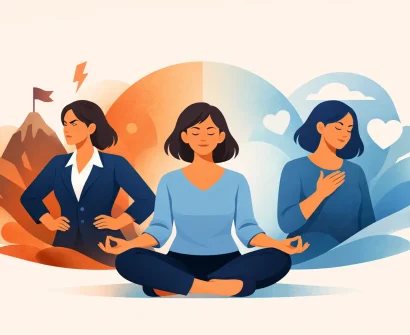
View hypervigilance as a protective force within you, not an enemy. This part of you may have learned at some point that heightened awareness prevents surprises, and that anticipating pain is less painful than experiencing it suddenly. Its intentions may be protective, but its approach has become costly.
Instead of telling him to disappear, calmly ask him: What are you trying to protect me from right now? What are you afraid will happen if I calm down? Sometimes behind this question lies a fear of rejection, humiliation, loss, or loss of control. When the fear is clearly visible, he begins to lose some of his grip.
This doesn't mean you should heed every message your anxiety sends you. Empathizing with your fearful side doesn't mean surrendering control. You can tell yourself: I understand your anxiety, and I'll remain vigilant, but we're not going to live today as if danger is everywhere.
Look for small triggers, not just the complete explanation.
Deep healing sometimes requires Understanding the rootsBut he also needs to note what triggers this state in your day. Does it intensify after lack of sleep? When you're hungry? After a family call? In crowded places? When you feel someone is displeased with you?
Don't take these notes to monitor yourself more closely, but rather to give yourself options. If you know that long meetings drain you, you might need five minutes of silence afterward before moving on to another task. If late-night browsing keeps your mind alert, perhaps the solution isn't more strict discipline, but a gentler transition routine before bed.
Calming down doesn't always come from adding more techniques. Sometimes it comes from reducing what sends the body a recurring danger signal: late-night caffeine, staying up late, prolonged isolation, relationships that force you to constantly justify your feelings, or working without clear boundaries. Not everything is within your control, but changing one manageable factor can significantly lighten the load.
When do you need deeper support?
If hypervigilance is constantly disrupting your sleep, causing panic attacks, making you avoid people, work, and life, or driving you to harmful behaviors, you shouldn't bear this alone. Professional support isn't an admission of failure, but a safe space where your body can learn what it couldn't learn on its own: that emotions are manageable, and that the past can be approached without being consumed by it.
Trauma-conscious work It's not simply about recounting what happened. It might involve noticing body language cues, understanding conflicting inner thoughts, and building a more compassionate relationship with oneself. Techniques such as compassionate inquiry, working with inner thoughts, and exercises can be helpful. Nervous system regulation It can be beneficial when practiced within a suitable and safe framework.
But speed matters. The goal isn't to reopen all wounds at once or to turn your sessions into a power play. Sometimes the right therapeutic step is to establish a sense of security in the present before approaching painful memories. True healing doesn't force its way in; it respects your natural rhythm.
Give your body daily proof of safety
Hypervigilance doesn't usually disappear after a single moment of awareness, because it wasn't built up in a day. But it does change when you're repeatedly given small experiences that contradict its old expectations: a meal eaten slowly; a message asking for what you need; sleep that you give yourself; a moment when you notice stress and then don't punish yourself for it; boundaries you set without lengthy explanations.
These aren't minor details for a nervous system accustomed to survival. They're new clues. And with each clue, your inner self learns that stillness isn't complacency, and that comfort doesn't mean you've left yourself exposed.
The next time you feel like you're about to explode from overexertion, don't ask yourself why you're like this. Ask yourself: What does this part of me need right now to feel less alone? The answer might be slower breathing, a firmer footing, a call with a trusted friend, or deeper support. In any case, remember: You don't need to win a war against yourself to begin making peace with yourself.