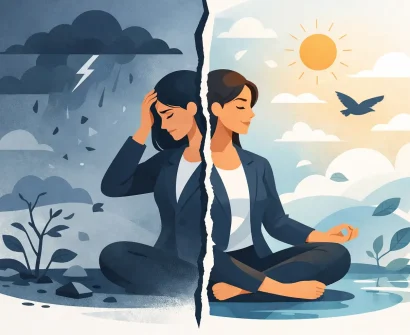




How can I release my stored fear without harming myself?
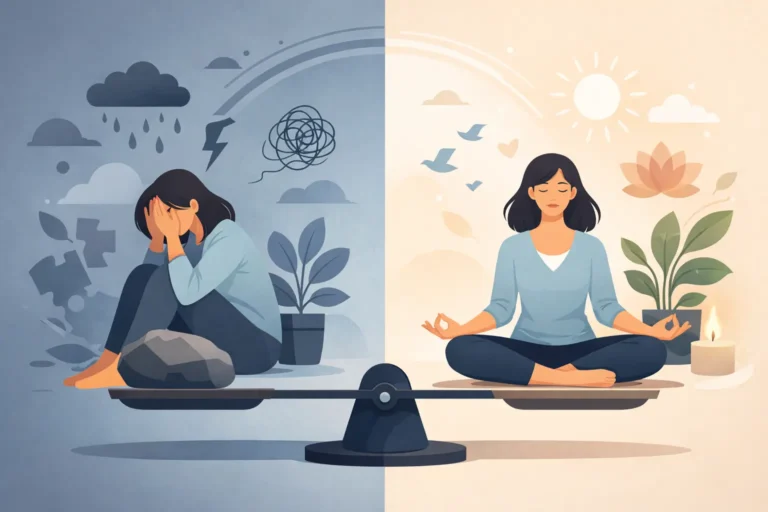
The question might seem: How do I release the stored fear? It's as if he's searching for a quick way to cry or vent, but it's deeper than that. Fear that hasn't found a safe space to be felt and understood can remain in the body, relationships, and decisions, even after the circumstances that gave rise to it have passed. You might be successful at work, responsible to your family, and able to carry on, but you wake up with inexplicable anxiety, or you crumble over a minor disagreement, or you find it difficult to calm down when there's no apparent danger.
This doesn't mean you're weak or that there's something wrong with you. It often means that your nervous system learned, at some point, that constant vigilance is the path to survival. Releasing this fear isn't about forcing yourself to remember everything, nor is it about a harsh confrontation with the past. It's about building a new relationship with what's happening inside you, a relationship of safety, honesty, and choice.
What is the real, stored fear?
Fear is not just an idea. When a person experiences a traumatic event, a repeated threat, or an environment where there is no space for expression or protection, the body responds automatically. It may fight, flee, freeze, or appease others to avoid danger. These are intelligent responses in the moment, even if they become exhausting years later.
When the response is incomplete due to young age, lack of support, or the need to carry on as if nothing happened, its effects may remain. You don't need to recall a major event to have an incomplete fear. Sometimes it stems from repeated criticism, a prolonged feeling of invisibility, responsibilities beyond your capacity, or a relationship that made you doubt your self-worth.
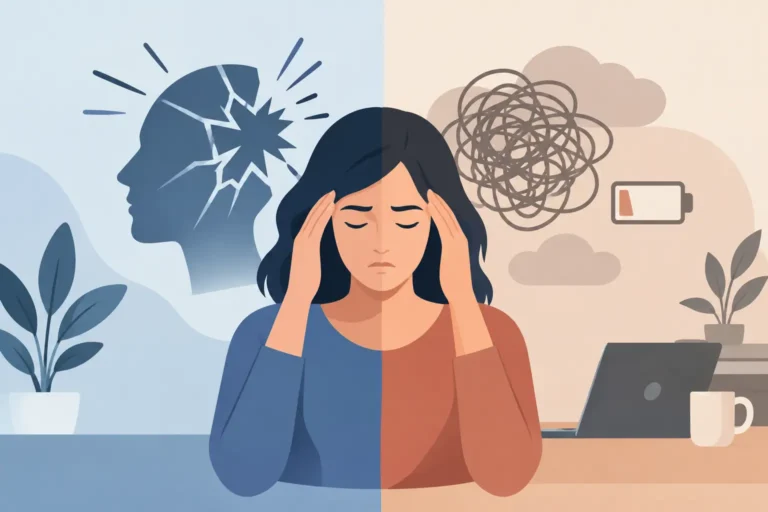
This is why stored fear can manifest in ways we don't call fear: insomnia, tightness in the chest or jaw, racing thoughts, sudden anger, avoidance of calls, difficulty saying no, an excessive need for control, or emotional detachment that makes you say, "I'm fine," when you feel nothing. The body isn't exaggerating. It's sending a signal that there's a burden that needs to be heard, not denied.
How can I safely release stored fear?
The starting point isn't dismantling the past entirely. The starting point is giving your body a realistic message: "I am here now, and I have choices." When a person is in a state of heightened alertness, mental advice alone won't help. You can't convince a frightened nervous system of safety through logic alone, just as you wouldn't ask a drowning person to analyze the reason for their fear before you extend your hand.
Start by naming what's happening without blaming yourself.
When anxiety or apprehension arises, try pausing for a moment and saying to yourself, "There is fear within me right now," instead of "I am a fearful person" or "I am a failure." This difference is subtle yet crucial. You are not your fear; you are the one who notices it.
Ask yourself gently: Where do I feel it? Is it a burning sensation in my face? A heaviness in my stomach? Trembling hands? An urge to escape? Don't immediately search for the cause or the story. Observe the sensation as it is, for a short time. Accurate labeling reduces confusion and gives you distance from an automatic response.
Return to the present through the body
If you're experiencing a wave of fear, choose something tangible from your current reality. Look around and name five things you see. Place your feet on the ground and pay attention to the pressure under your heels. Hold a cold glass or wash your hands with lukewarm water. Then, make your exhale slightly longer than your inhale, without straining or holding your breath.
This isn't a trick to ignore your feelings. It's a way to expand your capacity to feel them without letting them overwhelm you. Fear needs space around it—not a cage or a huge stage. If the feeling becomes too intense, open your eyes, move your body slowly, and reach out to someone you trust or move to a place where you feel safer.
Take action instead of judging your body's response.
Fear may contain pent-up defensive energy that hasn't found an outlet. Gentle movement can help some people: a leisurely walk, a shoulder stretch, pressing your hands against a wall for a few seconds, or a light rocking of your arms and legs—seeing if it feels comfortable. Don't make the movement a performance or a test of courage.
In practices like TRE®, physical shaking is seen as a response that may help release tension for some people, but gradual progression is key. If you feel dizzy, dissociated, panicky, or experience a rush of strong memories, stop. Returning to a stable state is more important than continuing. What works for one person may not work for another, especially with a history of complex trauma or panic attacks.
Listen to the fearful part instead of pushing it away.
In trauma-informed work, which incorporates some principles of Inner Family Systems Therapy (IFS), the anxious or avoidant part of yourself is not seen as the enemy. It may be a part of you trying to protect yourself from past disappointment, rejection, or loss of control. When you ask yourself, "Why did I mess everything up?", you may further isolate this part of yourself. When you ask, "What is it trying to protect me from?", something within you may begin to soften.
You don't need an immediate answer. It's enough to acknowledge its past function: perhaps this fear was the reason you were more cautious, avoided harm, or maintained relationships with those around you. Then remind it that you are older now, with resources and choices that weren't available before. Compassion here isn't self-indulgence; it's the foundation of inner peace.
What could disrupt the editing process?
One of the most common mistakes is turning healing into an accomplishment project. You want to "get over" the fear in one session, or you force yourself to relive painful memories because you've heard that confrontation is the answer. But intense stimulation isn't always therapeutic. Sometimes it's a re-immersion in the pain, leaving you more exhausted and disconnected.
Another mistake is relying on forced positivity. Phrases like "Everything will be alright" might help if said sincerely and at the right time, but they don't heal a body that believes danger is imminent. What that body needs is repeated exposure to safety: clearer boundaries, better sleep than possible, relationships that don't trivialize your feelings, and practice returning to the present moment.
Likewise, don't isolate fear from your daily life. If you're in an abusive relationship, under relentless work pressure, or in an environment that constantly erodes your sense of security, the solution won't be solely internal. Liberation sometimes involves an external decision: seeking support, setting boundaries, reducing your exposure to a draining source, or re-prioritizing. Deep work doesn't require you to adapt to what's hurting you.
When do you need expert support?
Seeking professional support is not a sign of inadequacy on your own. It's a structured space that helps you get to the root of your problems without losing your balance. It can be especially important if your fear is disrupting your sleep, work, or relationships, or if it's accompanied by recurring panic attacks, nightmares, episodes of dissociation, intrusive memories, or impulses to self-harm.
A trauma-aware practitioner doesn't push you to confess or interpret your life from above. They help you build internal resources, recognize protective patterns, and understand the connection between your story, your body, and your relationships. You may benefit from approaches such as Compassionate Inquiry, NARM®, IFS, or temporal and boundary-aware physical interventions. The choice of approach depends on your needs and history, and how safe and trusting you feel with the practitioner.
If you have thoughts of harming yourself or feel unable to stay safe, immediately contact a trusted friend or family member, or your local emergency and healthcare services. Do not face this moment alone.
Healing doesn't mean never being afraid.
True liberation doesn't mean your body becomes unresponsive, nor does it mean you cease to be affected. It means knowing the difference between yesterday's danger and today's reality. It means letting fear pass through you as a signal to be heeded, rather than running your life from behind.
Give yourself permission to slow down. Every time you acknowledge your fear without abandoning yourself, every time you gently return to your body, you are building a sense of security that wasn't available to you before. And this is no small step. It's the beginning of an honest return to yourself.