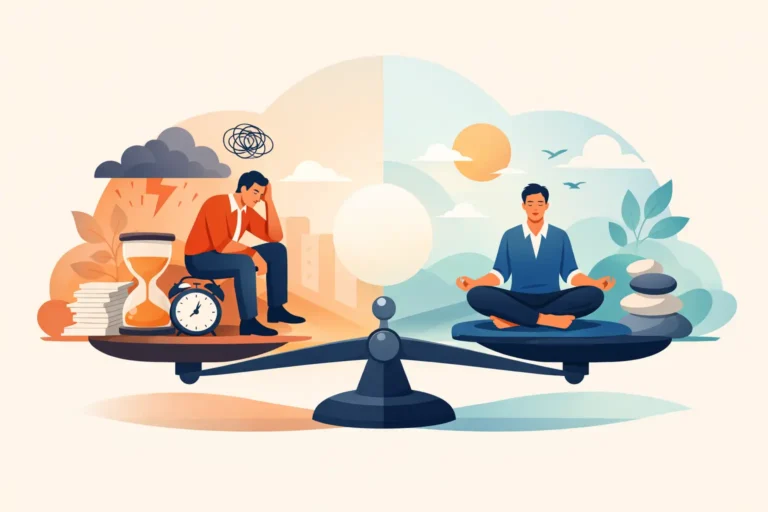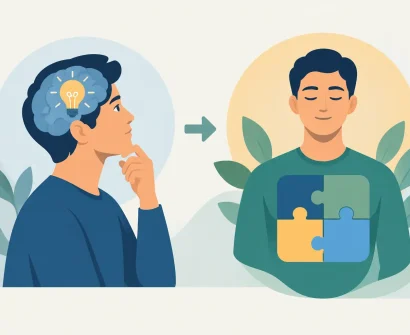



How do you understand the difference between trauma and burnout?
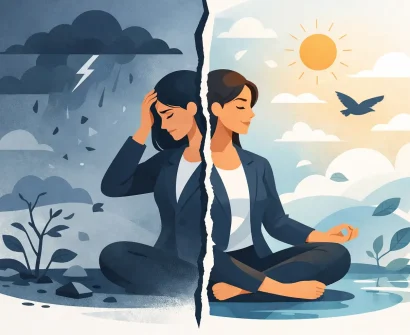
You might wake up after a full night's sleep feeling unrefreshed. You might finish your tasks, reply to messages, and maintain your image in front of others, while something inside you is silently slipping away. This is where the confusion begins: Is this work-related exhaustion that needs a break? Or is your nervous system carrying a deeper, older burden? Understanding The difference between trauma and burnout It is not an exercise in labeling, but a compassionate step that prevents you from demanding the wrong treatment from yourself.
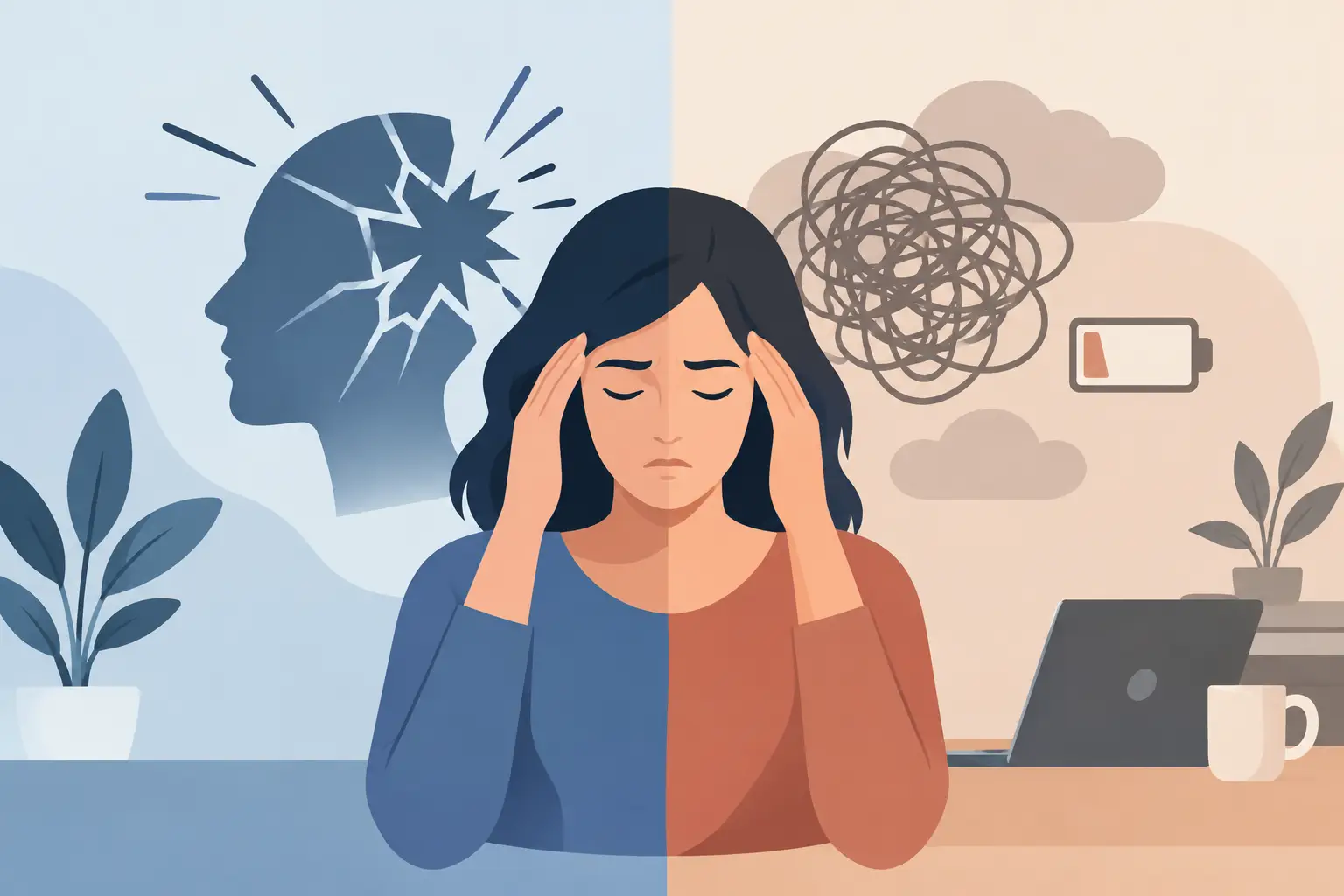
Burnout and trauma may appear similar on the surface: poor sleep, irritability, difficulty concentrating, loss of interest, and social withdrawal. But their root causes are different, and therefore the paths to recovery are different. Not all fatigue is trauma, and not all trauma manifests as a vivid memory or dramatic event.
What is psychological trauma really?
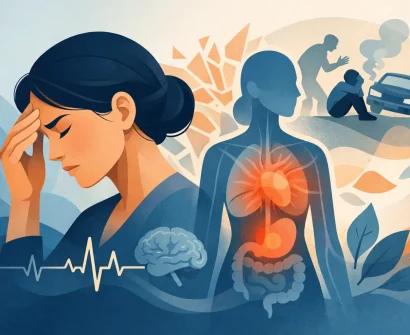
Trauma is not just the event itself, but the impact it has on your nervous system when it exceeds what you can tolerate or process at that moment. It may stem from an accident, loss, or assault, but it can also arise from years of criticism, emotional neglect, insecurity at home, or a constant need to please others to remain accepted.
When the body feels unable to fight, flee, or call for help, it may enter a state of immobility or dissociation. Even after the situation appears to be over, this response may persist as if the danger were still present. This is why someone might over-apologize, crumble at a harsh tone of voice, or find it difficult to trust and relax, without understanding why.
Trauma doesn't signify weakness of character. It's a smart adaptation your system made to protect you at a time when your options were limited. The problem arises when this protection mechanism continues to dictate your life after the danger has passed.
What is burnout?
Burnout is a cumulative exhaustion that occurs when demands consistently exceed your capacity to rest, recover, and find meaning. It's often associated with work, but it's not limited to it. A parent or caregiver might burn out, or you might burn out in a draining relationship, while studying, or under prolonged financial pressure.
In the beginning, you usually try to compensate with more: longer hours, stricter discipline, more coffee, and putting off rest. Then efficiency turns into a burden. What was easy becomes exhausting, what was important loses its meaning, and you may feel apathetic, cynical, or guilty for no longer being able to give as you once did.
Burnout is not laziness nor a sign of lack of ambition. It often affects the most committed people, those who are used to taking on more than they can handle and who equate their worth with their accomplishments.
The difference between trauma and burnout at its root
The most obvious difference is that burnout typically stems from chronic depletion and a lack of recovery, while trauma arises from an experience or pattern of experiences that has created a profound sense of helplessness, danger, or insecurity. But reality is more complex than this simple distinction suggests.
A burnt-out person may clearly improve when stress decreases, sleep returns, boundaries are set, and they rejoin a more humane work environment. However, someone carrying untreated trauma may find that even rest itself triggers anxiety. They might take a vacation and feel guilty, or they might find some peace and then... The tension returns immediately. A simple situation reminds him, subconsciously, of an old experience.
Burnout often says: I don't have enough energy to continue at this pace. Shock might say: I'm not safe even when everything seems calm.
How does each of them manifest in the body?
In burnout, the body may appear sluggish and lethargic: headaches, muscle tension, sleep disturbances, persistent exhaustion, and extreme resistance to initiating tasks. The underlying message is the need to stop and recover.
In shock, the body may oscillate between two extremes: hypervigilance and tension, or numbness and apathy. You may scan faces for rejection, be easily surprised, avoid ordinary situations, or feel detached from your body and emotions. Your response may shift rapidly from hyperactivity to collapse.
These are indicators, not a diagnosis. Depression, anxiety, sleep disorders, and physical health conditions may also overlap with them, so the human experience should not be reduced to a single label.
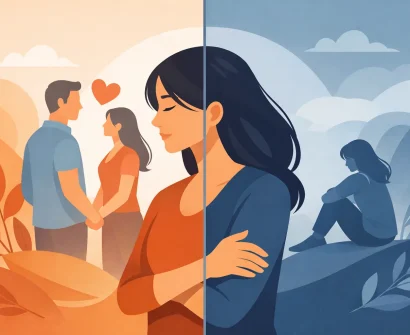
How does each of them manifest in relationships?
Burnout can make you less patient and less present. You want to be alone because any additional demands feel like a new burden. But once you regain your energy, you can often return to connection and warmth.
Trauma can turn the relationship itself into a warning sign. Closeness can awaken a fear of abandonment, criticism can feel like a threat, and normal disagreements can lead to either complete withdrawal or excessive indulgence. This doesn't mean you're difficult or incapable of love. It means that a part of you has learned that closeness can be painful or insecure.
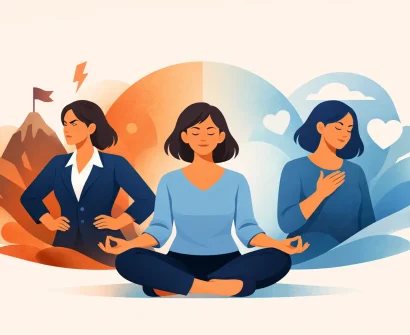
When burning and shock come together
Many people don't experience burnout in isolation. Burnout can be the gateway to a deeper, more recent trauma. When your energy for functioning and control wanes, feelings you've been suppressing for years can surface. Trauma can also make burnout more likely, as the individual expends a tremendous amount of energy monitoring others, avoiding mistakes, proving their worth, and suppressing their own needs.
For example, someone might work tirelessly because they were raised to believe their worth comes from achievement. Outwardly, they may appear ambitious, but inwardly, they are driven by a survival instinct. In this case, advice like "take a vacation" isn't enough. Vacation is necessary, yes, but it alone doesn't address the deep-seated belief that stopping will make you unlovable or unimportant.
Questions that help you differentiate
Instead of asking what's wrong with me, try asking: When did this start? Does it noticeably decrease when I sleep and lighten my commitments? Are there situations, voices, or patterns of criticism that trigger a reaction larger than the moment warrants? Do I just feel tired, or insecure as well? And can I rest without guilt or anxiety?
If fatigue is linked to a specific stressful period and improves as the load is reduced, burnout may be at the forefront. If your response recurs across different contexts, or involves fear, numbness, detachment, and difficulty feeling safe, the underlying trauma may warrant deeper investigation.
You don't need to find the perfect answer before seeking support. Sometimes, the confusion itself is a sign that you've been carrying too much on your own for too long.
What helps without diminishing your experience?
In burnout, the practical treatment begins with stemming the bleeding: reducing commitments where possible, protecting sleep, taking genuine breaks without screens or work, reviewing boundaries, and redistributing responsibilities. A depleted nervous system cannot recover while receiving the same message every day: do more.
When working with trauma, the priority is not forcing yourself to remember everything or reliving the pain. The priority is... Building security Gradual progression and the ability to observe what is happening in the body without drowning may help. Shock-aware approaches Such as compassionate inquiry, vibration and deconstruction therapy, and working with internal components, in understanding responses that seem perplexing without treating them as a flaw.
The right approach depends on your history, your current stability, and having a secure support system around you. Deep work requires a pace that respects your limitations, not new pressure in the name of recovery.
When does seeking assistance become necessary?
Seek professional support if feelings of depression or anxiety persist despite attempts to relax, if symptoms interfere with your work, relationships, or sleep, or if you experience panic attacks, intrusive memories, detachment from yourself, or a recurring feeling that life is meaningless. If you have thoughts of harming yourself or feel unable to stay safe, contact your local emergency services or a trusted person nearby immediately.
Trauma-conscious support doesn't require you to prove your pain is significant enough. It's a space that helps you see the pattern clearly, reconnect with your body, and build genuine capacity for choice rather than automatic reaction.
You don't have to push yourself to the limit to deserve rest. Start by listening to the signal your inner voice is sending: perhaps a part of you needs sleep and boundaries, or perhaps a deeper part needs security, understanding, and a compassionate observer. In either case, genuine listening isn't a retreat from your life, but rather the beginning of your return.