



A guide to safe insight and psychological integration sessions
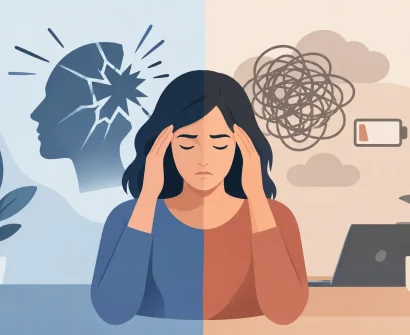
You might succeed at work, accomplish your tasks, and appear composed to others, only to find yourself at night unable to stop thinking. You might experience a unease you can't name, become angry in a way that surprises you, or distance yourself from someone you love despite wanting to be close. Guide to Insight and Psychological Integration Sessions It starts with this simple fact: what appears in your life is not always the problem itself, but may be a sign of something deeper that needs to be seen and understood safely.
Insight and psychological integration sessions are not lectures on positivity, nor are they spaces for quick tips on confidence or productivity. They are structured spaces that help you approach your inner world without judgment, and understand the patterns that were formed to protect you in the past, even if they are now a source of anxiety, stress, or alienation from yourself.
What is meant by insight and psychological integration?
Insight is seeing clearly what has been working in the background. It's noticing, for example, that your fear of rejection isn't just about a message that went unanswered, but rather a past experience that taught your nervous system that intimacy isn't guaranteed. Or realizing that your drive to achieve isn't pure ambition, but a constant attempt to prove that you deserve acceptance.
Psychological integration is the step that follows understanding. Simply knowing the cause doesn't automatically change your response. You might know perfectly well that your father's criticism affected you, yet still get flustered whenever you receive a minor comment at work. Integration means giving what you've discovered a place in your consciousness, your body, and your current life, and learning to respond from a calmer, more open position.
This doesn't mean erasing the past or turning you into someone unaffected by anything. The goal is more realistic and profound: to lessen the control old reactions have over you, and to regain the ability to choose when pressure mounts.
How does a session of insight and psychological integration go?
The session typically begins with what's happening now, not with an attempt to extract every detail of your history at once. You might talk about recurring insomnia, a draining relationship, a fear of making a decision, or a heavy feeling of being lost. A trained practitioner doesn't presume to understand your experience from the outset, but rather helps you slow down and reflect on it with insightful questions and a supportive presence.
Instead of asking, «Why am I like this?» which implies self-accusation, the questions might become: «What happens inside me when this situation arises?» «Which part of me is trying to protect itself?» and «What does that part need now?» This shift in language is important because it moves you from self-judgment to self-understanding.
In some sessions, special attention is paid to body cues: chest tightness, jaw clenching, stomach heaviness, rapid pulse, or numbness. The body doesn't always tell the story in words, but it carries traces of experiences that haven't had enough space to be processed. Addressing these cues is done gradually, not by forcing you into painful recollections or compelling you to cry.
Principles from trauma-conscious practices such as compassionate inquiry, working with internal components, or regulating the nervous system may be used, depending on your needs and the practitioner's experience. However, the name of the approach is not as important as the quality of the relationship, clear boundaries, and the ability to respect your pace.
Why isn't a moment of awareness enough on its own?
Perhaps you've experienced a powerful moment of understanding after reading a book or watching moving content: "Now I know the root of my problem." This moment is valuable, but it can become painful if you keep it to yourself. Realization can trigger feelings of sadness, anger, or fear, and it can allow you to see your relationships with a clarity you weren't fully prepared for.
This is where integration comes in. It involves returning to your daily life with actionable steps: noticing triggers, setting more honest boundaries, practicing appropriate calming techniques, or speaking to a loved one differently. You don't need to change your entire life in one session. Sustainable change is often quiet and accumulates from small, repeated choices.
Who would these sessions be suitable for?
This might suit you if you feel you understand yourself intellectually, but can't change recurring patterns in your relationships or decisions. It might also be appropriate if anxiety accompanies you despite seemingly stable life circumstances, or if you are carrying constant tension Don't be afraid of a short rest or vacation.
It may also be beneficial for those experiencing an internal conflict between what they want and what they believe they should want. This could include professionals who have achieved a good position but feel a deep emptiness, those who please everyone but then collapse in isolation, or those who oscillate between attachment and withdrawal in relationships.
However, its suitability depends on your individual circumstances. If you are experiencing thoughts of harming yourself or others, a severe loss of contact with reality, or an acute mental health crisis, your priority should be to contact emergency services or a licensed professional for urgent medical care in your area. Insight-taking sessions are not a substitute for professional medical or psychological evaluation and treatment when needed.
What makes the session truly safe?
Security isn't about feeling comfortable every minute. Sometimes inner work touches on difficult feelings. True security is having the right to pause, the right not to respond, and the right to say the pace is too fast, without it being interpreted as resistance or failure.
A good practitioner doesn't promise a quick cure, nor does they claim to know you better than you know yourself. They don't pressure you to recall events you don't remember, nor do they turn every difficulty into a "trauma" without a responsible assessment. They also clearly define their professional limitations, what they can offer, and when they need to refer you to another specialist.
You also have the right to ask before starting about the nature of the sessions, the experience and training involved, confidentiality, and what happens if you feel uncomfortable after the meeting. These questions don't mean you're skeptical; they mean you're building a conscious and protective relationship.
How do you prepare for an insight and psychological integration session?
You don't need a carefully crafted story or specialized psychological jargon. A simple honesty is enough: "I don't know why I feel this way, but I'm tired of carrying this burden alone." However, it might help to note, over the past few days, a recurring situation where the emotion has been present, a recurring thought, or a physical sensation that appears at a specific time.
Try to leave as much quiet time as possible after the session. If you have the option, don't schedule a stressful meeting immediately afterward. Drink water, take a short walk, and write a few sentences about what you've retained. The goal isn't to analyze every word that was said, but rather to allow your experience time to settle.
If you experience strong emotions, don't make life-altering decisions immediately, such as ending a relationship or quitting a job, until you've given yourself enough time to think things through. Insight illuminates what was previously unclear, but it requires calm and wisdom to translate into appropriate action.
Signs of progress that deserve attention
Progress doesn't always manifest as a constant feeling of happiness. You might notice that you're catching your stress before it explodes, that you can ask for what you need instead of remaining silent, or that you recover more quickly after a stressful situation. You might also begin to distinguish between the voice of fear and the voice of your intuition, and between healthy guilt and the guilt you've habitually carried to please others.
Sometimes the biggest change is simply stopping treating yourself like a problem to be fixed. When you understand that many of your behaviors were protective, it becomes possible to deal with them with both compassion and responsibility. Don't justify the harm you've done, and don't hate yourself for what you've been through.
You're not too late because you're still affected. And you're not weak because you need a space where you can be truly heard. When you find thoughtful and safe support, what felt like an inner conflict can become the beginning of a more honest relationship with yourself, and a quiet step toward a life that truly reflects who you are.